Loyalty program for multiple locations: 5 decisions to make early
Loyalty program for multiple locations: one shared card, rewards redeemed elsewhere, numbers per branch, team access and local messages. Five decisions.
Once you open a second location, your loyalty program is no longer just about the reward. Suddenly you have to decide whether the card is shared, who pays for a reward redeemed at another branch and who gets to see which numbers. Here are five decisions that are better made at the start than six months in, when each location has solved them its own way.
1. One card, or a card per location
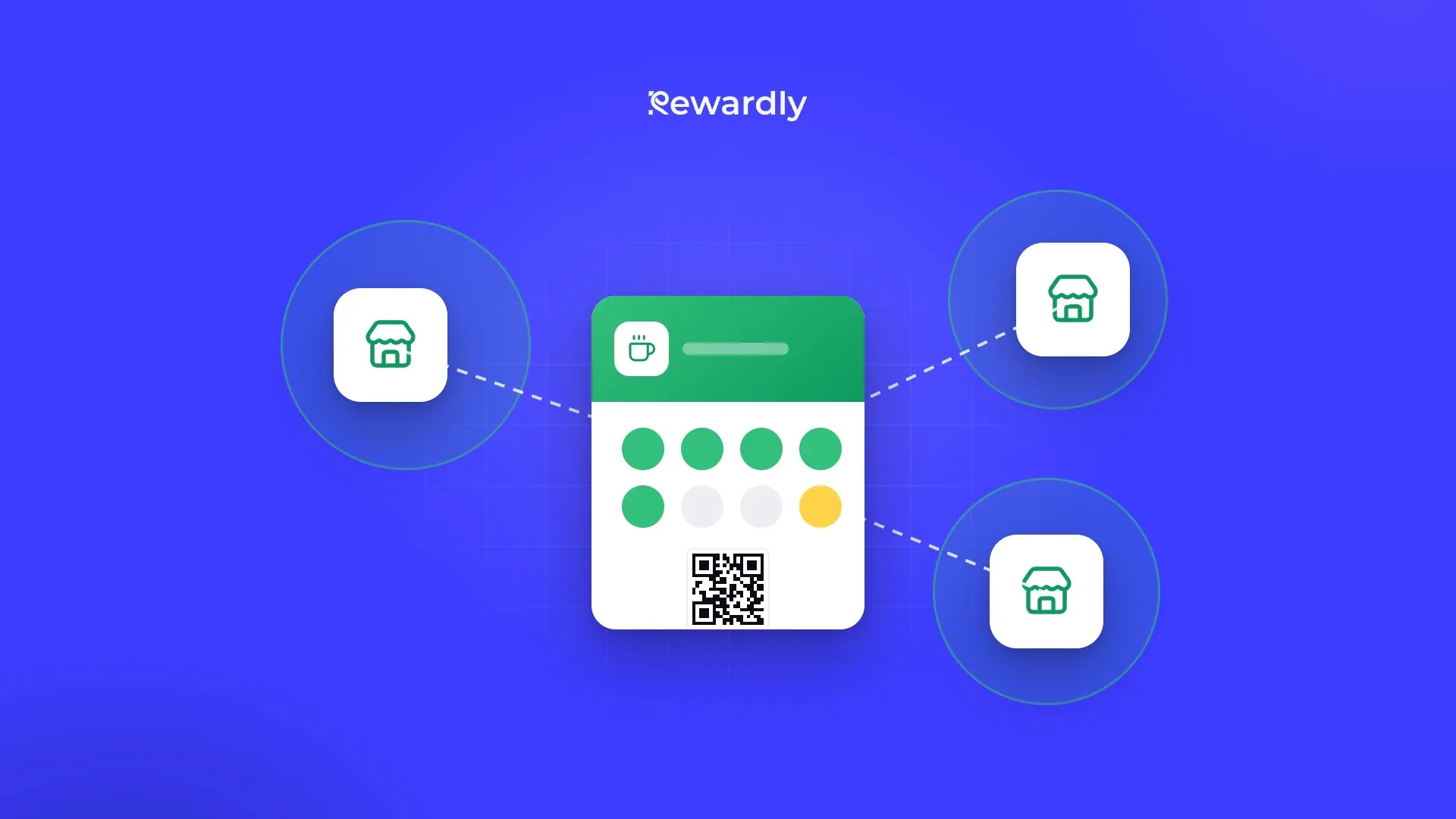
Our recommendation: one shared card. Customers collect wherever they visit you and never have to think about which card works where. For you it means one campaign, one poster and one story.
When to do it differently: if your locations run under different brands or sell completely different things, for example a café and a dry cleaner. A shared reward would make no sense there.
2. Who pays for a reward redeemed elsewhere
Our recommendation: agree a simple internal rule in advance. The easiest is that the location where the reward is redeemed carries its cost, and once a quarter you check that it is not badly unbalanced. This is an accounting decision for the owner, not a system setting.
When to do it differently: if the locations are run by different operators or it is a franchise. Then you need a written settlement rule, or rewards will turn into a dispute.
3. Numbers per location, or combined
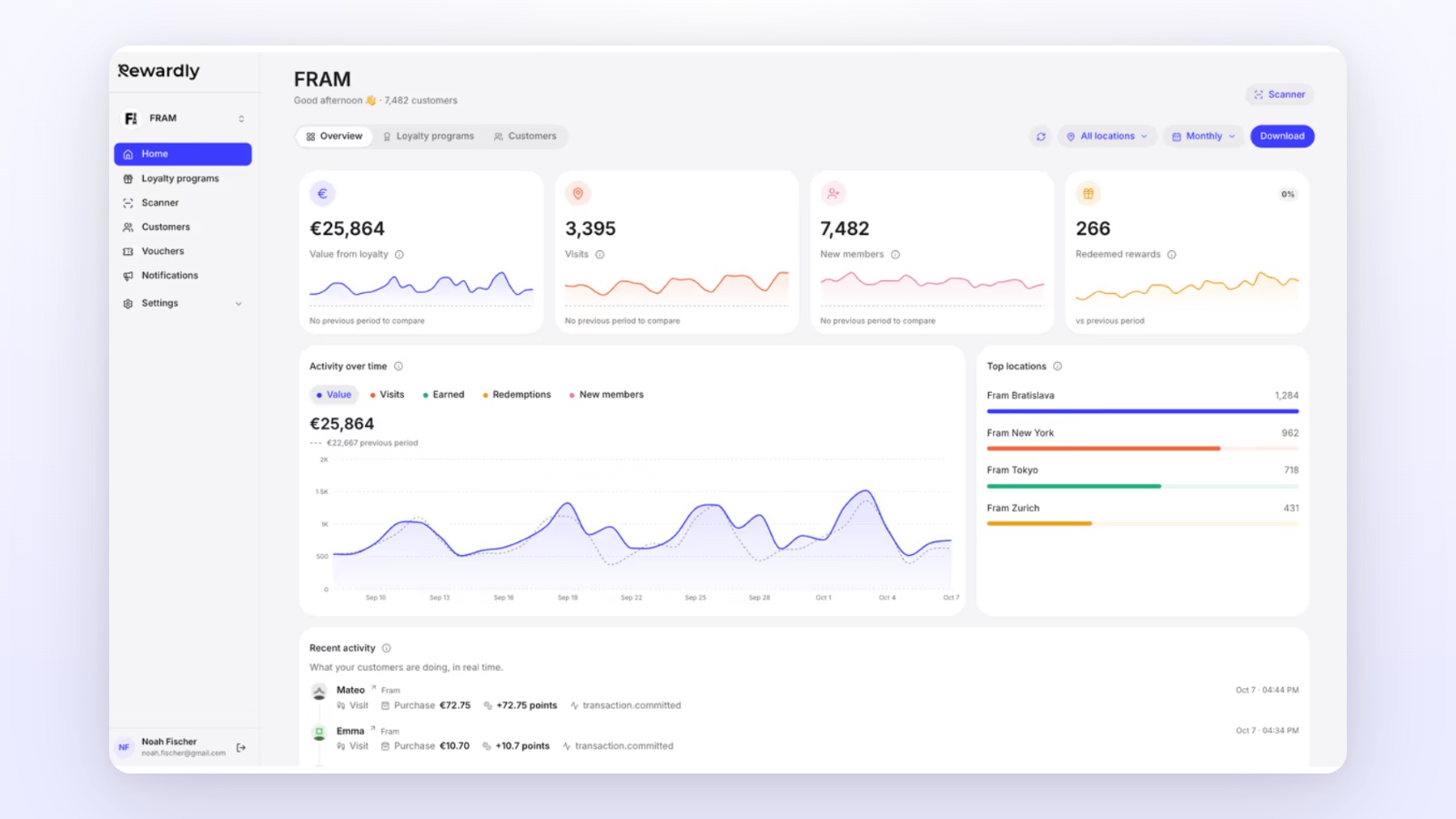
Our recommendation: track both. The overall numbers tell you whether the program works, and comparing locations shows where it is lagging. Rewardly analytics shows your top locations and how they compare.
When to do it differently: early on, when one location brings in the vast majority of revenue, a combined view is enough. Start comparing once each branch has enough members.
4. Who can do what
Our recommendation: split the roles. Staff scan cards, location managers follow their own results, and only one or two people send messages to customers. Rewardly works with roles and permissions, so a part time worker does not need access to the whole program.
When to do it differently: with two small locations where the owner does everything, one login with two step verification is enough.
5. Shared messages and location notifications
Our recommendation: keep shared messages, such as birthdays, central. With push notifications, you can also switch on location notifications: the card appears on the customer's lock screen when they are near one of your locations, with one short text for all of them. A card can show up to 10 locations. How this works in practice is explained in how geotargeting works in a mobile wallet.
When to do it differently: if one location has its own offer. Send it as a normal message and name the location in it, because the lock screen text is shared.
Checklist for your managers' meeting
Print it and go through it at your next meeting:
- One shared card, or separate cards?
- Who carries the cost of a reward redeemed at another location, and when do we review it?
- Which numbers do we track monthly, per location and combined?
- Who has which access, and who is allowed to send messages?
- Which short text appears on the lock screen near our locations?
Larger chains face the same questions. Rewardly is used, for example, by Čistiareň Blesk across 14 locations and Goriffee across 3 locations. Pricing is per location and goes down from the fourth location; see the pricing page for details.
Try Rewardly across all your locations for €0
Live in 2 minutes, with no upfront payment.