Customer retention rate by industry: 2026 data for cafés, restaurants and salons
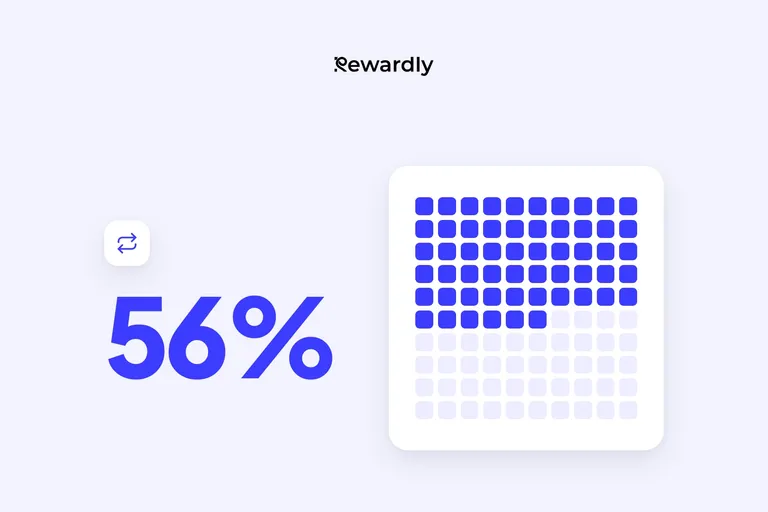
Customer retention rate by industry from 40,000+ loyalty members: 56% of new members return within 90 days. Benchmarks for cafés, restaurants and salons.

What is a good customer retention rate for a café? Is a restaurant doing badly if fewer than half of its new guests return within a month? The benchmarks you find online mostly come from online shops or contradict each other. So we pulled together what we measured ourselves: anonymised visits of more than 40,000 loyalty members at more than 200 cafés, restaurants, bakeries, salons and other local businesses that use Rewardly, May 2025 to October 2026.
Why it matters for your revenue: every repeat visit is a sale. Rewardly's clients see 30% more repeat visits and 2.5 times higher customer value on average, and café Ráno in Bratislava reports 32% more revenue six months after moving to Rewardly.
The short answer
- Across all businesses, 42.5% of new loyalty members came back within 30 days and 56.0% within 90 days.
- Cafés and bakeries led at 30 days (44.5% and 45.3%). Restaurants came in at 39.5%, beauty, nails and fitness at 34.1%.
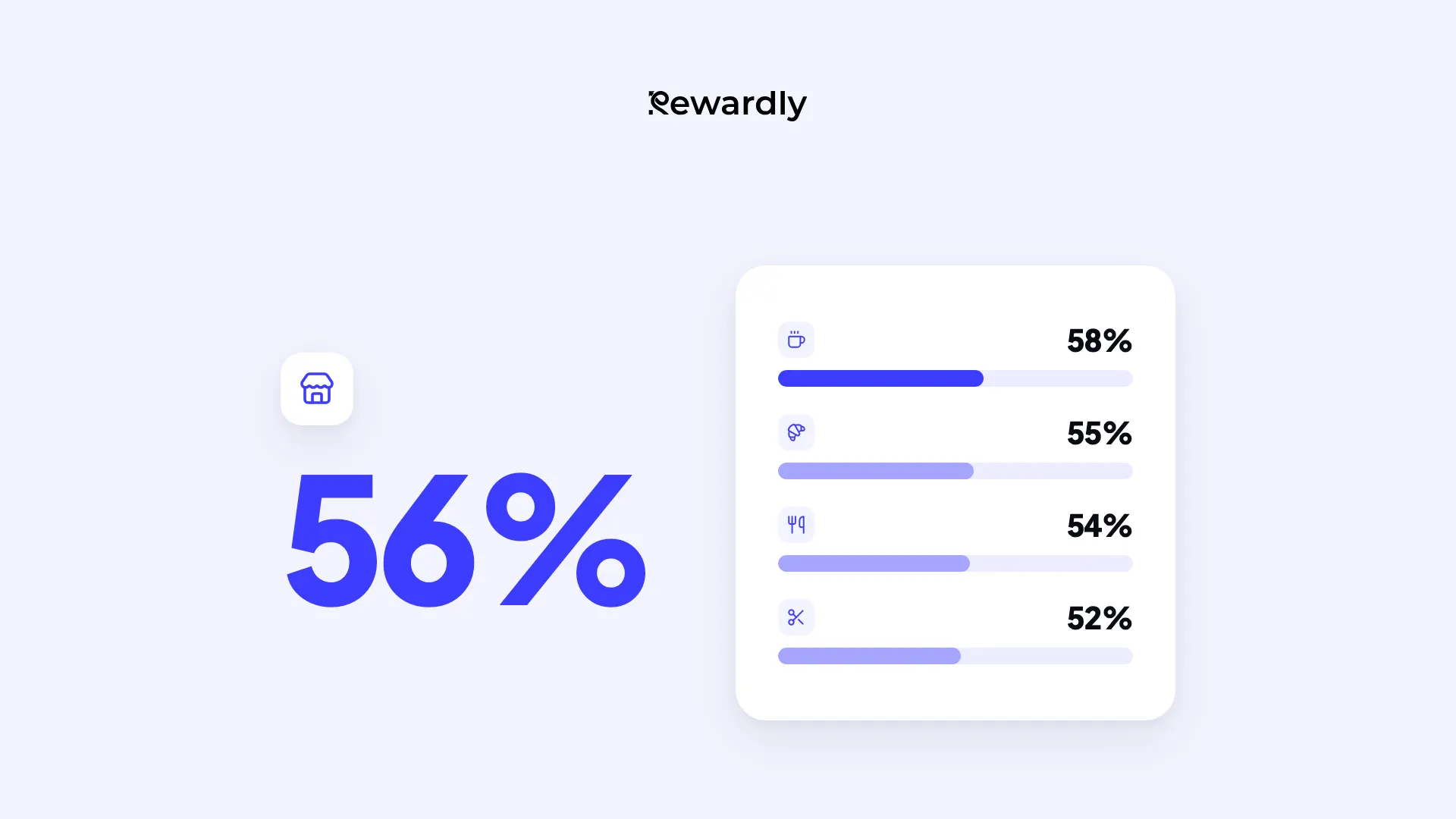
- After 90 days the gap closes: every industry sits between 51.6% and 57.9%.
- The typical returning member came back after 11 days at a bakery, 15 at a café, 18 at a restaurant and 27 at a salon or studio.
- About one in five new members (20.5%) was still visiting in their twelfth month. At cafés and matcha bars it was one in four (24.9%).
Customer retention benchmarks by industry
Each row comes from one of our published data studies, linked under the table. The studies cover different periods and sets of businesses, so compare within a row, not across rows.
Measure | Cafés | Restaurants | Bakeries | Beauty, nails, fitness | All businesses |
|---|---|---|---|---|---|
New members back within 30 days | 44.5% | 39.5% | 45.3% | 34.1% | 42.5% |
New members back within 90 days | 57.9% | 54.0% | 55.2% | 51.6% | 56.0% |
Typical days until the second visit | 15 | 18 | 11 | 27 | 15 |
3 in 4 returning members back within | 47 days | 44 days | 32 days | 45 days | n/a |
Second visit within six months | 66.5% | 61.5% | not enough data | 60.2% | 63.3% |
Fourth visit after a third one | 82.7% | 79.5% | not enough data | 82.4% | 81.8% |
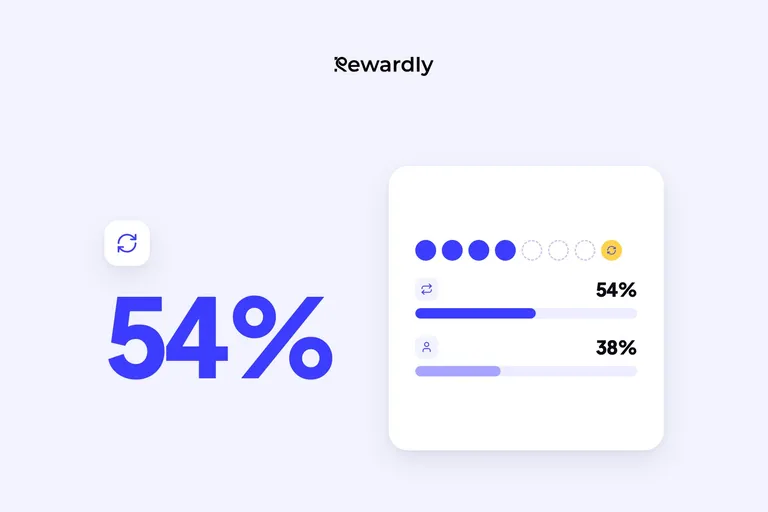
Regulars who came back after two quiet months | 63.3% | 50.0% | 49.0% | 29.4% | 54.2% |
Visit days a year: top 10% of members | 40.0 | 14.2 | not enough data | not enough data | 24.5 |
Visit days a year: average member | 7.6 | 3.6 | not enough data | not enough data | 5.1 |
Sources: rows 1 to 4 how soon loyalty members come back, rows 5 and 6 the second visit is the hardest, row 7 quiet members come back, rows 8 and 9 how often your best customers visit. In rows 1 to 4, "cafés" means coffee shops; in rows 5 to 9, matcha and tea bars are counted with them.

What a good customer retention rate looks like in your industry
The simplest number you can track is the share of new members who come back within 90 days. If you are close to the line for your industry, you are doing what similar businesses do. Across 60 businesses with at least 100 new members, the share who made a second visit within six months was 65.2% in the typical business, and half of all businesses landed between 50.8% and 73.9%. That range is a fair picture of normal.
Cafés: the fastest habit, the strongest regulars
Cafés led on almost every measure. A café's top 10% of members came on 40 days a year, against 7.6 for the average member: in the typical café, almost five times as often. And when café regulars went quiet for two months, 63.3% came back on their own, the highest of any industry. For a café, the biggest opportunity is the step from a first coffee to a weekly habit.
Restaurants: a monthly rhythm
Restaurants had the lowest 30 day figure of the food businesses (39.5%) but caught up to 54.0% by day 90. A returning guest typically came back after 18 days, and the top 10% visited on about 14 days a year, a little more than once a month. A reminder works best on that monthly rhythm, not a weekly one.
Bakeries: back quickly, or not at all
Bakery members who returned came back fastest: the typical one after 11 days, and three in four within 32 days. Of the 55.2% back within 90 days, 45.3 points were already back within the first 30. If a new bakery member has not come back within a month, that is the moment to remind them.
Salons and studios: a longer cycle, a bigger drop when people go quiet
Beauty, nail and fitness studios have the longest cycle: a typical 27 days to the second visit. Their members were as loyal as anyone's once they had three visits (82.4% came a fourth time). But only 29.4% of regulars who went quiet for two months came back, against about half in the food businesses. Our suggestion for a salon: book the next appointment before the client leaves, so the gap never gets long enough to go quiet.

What holds in every industry
- The second visit is the hardest. About one in three new members did not come back within six months. Once a member reached a third visit, more than four in five came again. In 59 of 60 businesses we checked, the step from the third to the fourth visit was easier than the step from the first to the second.
- A small group carries the visits. In the typical business the most loyal 20% of members made 65% of all member visits.
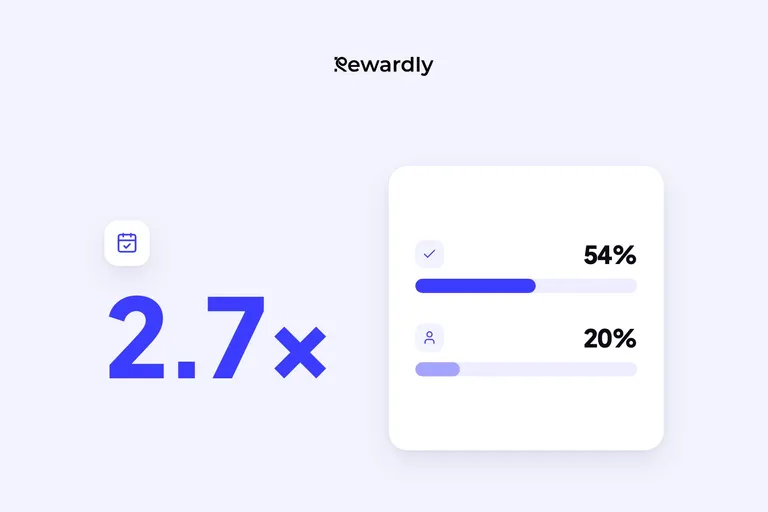
- The first month predicts the year. Members who came back in their first month were 2.7 times as likely to still be visiting 10 to 12 months later (full study).
- Weekend joiners return less often. 57.1% of weekday joiners were back within 90 days, against 51.2% of weekend joiners.
How to compare your own retention rate
- Take the new members of one month, for example everyone who joined in March.
- Count how many came back within 90 days. Divide by the number who joined. That is your 90 day return rate.
- Compare it with your industry's row in the table above. Use the same window: a 30 day rate is always lower than a 90 day rate.
- Repeat every month. One month can be noisy; the trend tells you more.
This measures new members, not all your customers. Regulars return far more reliably, so a retention rate over all customers comes out higher.
What to do if you are below your benchmark
- Give a reason to come back after the first visit. Mention at the till how close the first reward already is.
- Time the reminder to your industry's rhythm. About two weeks after the first visit for a bakery or café, three weeks for a restaurant, four for a salon. This timing is our suggestion based on the typical gaps above, not something we measured.
- Win back quiet regulars. More than half of quiet regulars came back on their own; a message after a few quiet weeks can give the rest a reason.
- Look after your top 10%. They visit several times as often as the average member. Know who they are.
How Rewardly helps you hit your benchmark
- See your own numbers. Rewardly analytics shows how many new members you get, how often they return and who your top customers are.
- Automatic reminders. On the Advanced and Professional plans you can send a welcome message to new card holders and a reminder that goes out when a member has not returned within the number of days you choose. More about push notifications.
- A card that stays in their phone. Customers add the card to Apple Wallet or Google Wallet in 10 seconds, and setup takes 2 minutes.
FAQ
What is a good customer retention rate for a restaurant?
In Rewardly's data, 39.5% of new restaurant loyalty members came back within 30 days and 54.0% within 90 days. If more than half of your new members return within three months, you are in line with similar restaurants.
What is a good customer retention rate for a café?
44.5% of new café members came back within 30 days and 57.9% within 90 days. The typical returning member was back after 15 days.
How long does it take a new customer to come back?
The typical returning member came back after 15 days across all businesses: 11 days at bakeries, 15 at cafés, 18 at restaurants and 27 at salons and studios.
Why is my retention rate higher than these benchmarks?
These figures cover new loyalty members only. If you measure all customers, including long time regulars, your rate will be higher. Compare like with like.
About the data
- Anonymised scans in the Rewardly scanner, May 2025 to October 2026, from seven published studies. Each row uses the period and the businesses of its study: return windows 41,511 new members at 243 businesses, second and fourth visits 27,641 new members at 175 businesses, quiet regulars 28,966 members at 221 businesses, top members 41,187 members at 60 businesses, twelfth month 9,528 members. A visit is a card scanned on a given day. No business is named or identifiable.
- We included only businesses that scan cards in the Rewardly app, without accounts with gaps in measurement, one business with a different scanning method and likely staff test cards.
- Industry groups are small for bakeries (5 or 6 businesses) and for beauty, nails and fitness (6 or 7 businesses), so treat those rows as a guide. Where an industry had too few businesses, we left the cell empty.
- The figures describe how loyalty members behave. They are not a before and after comparison and do not show what any one business would see.
Find out where you stand against your industry. Try Rewardly for €0
Live in 2 minutes, with no upfront payment.