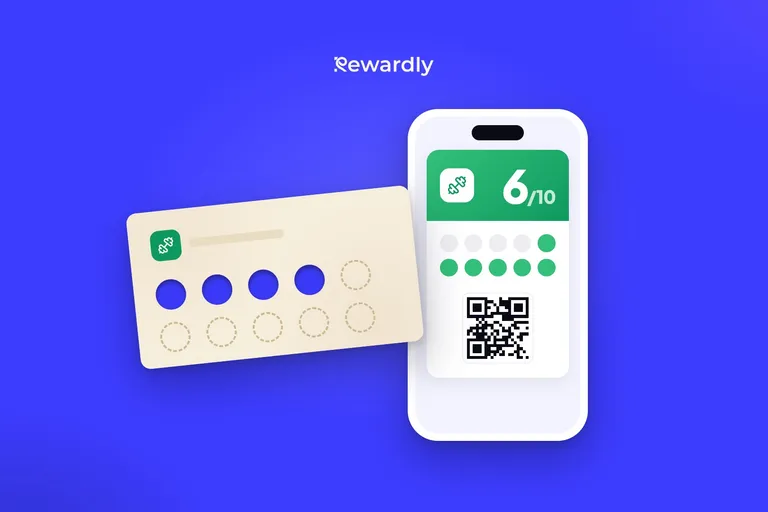

How many stamps on a loyalty card: a simple calculation
How many stamps on a loyalty card? A simple effective discount formula, a visit frequency check and four worked examples for a café, bakery and barbershop.
How many stamps to put on a loyalty card comes down to two numbers: what the reward really costs you and how often a regular comes back. "Every tenth coffee free" is a habit, not a calculation. Below is one formula, one check and four examples to set up your card in a few minutes.
The formula: what the card costs you
Effective discount = reward cost ÷ (number of stamps × average purchase)
The key word is cost. Do not put the menu price of the reward into the formula, but what the reward actually costs you: ingredients, stock, and staff time if relevant.
Example for a café: one stamp per coffee, a coffee costs €3, and the reward is a free coffee that costs you, say, €0.60. With ten stamps that is 0.60 ÷ (10 × 3) = 2%. The customer, meanwhile, judges the value by the menu price: they got a €3 coffee after spending €30, which is 10%. That gap between what the customer feels and what you pay is exactly what makes a stamp card good business.
The check: can a regular actually fill it?
The second question matters more than the first. Does a typical regular fill the card in roughly 4 to 8 weeks? That range is our rule of thumb, not a research finding. If it takes six months, the customer forgets the card before they ever see the reward.
If a customer comes for coffee twice a week, they fill ten stamps in five weeks. That is fine. If they come once every two weeks, it takes them five months, and then it is better to cut the card to six stamps and make the reward smaller to match.
For services people visit once a month, such as a barber, no sensible card fits into eight weeks. There, think in visits and give the reward on the fifth or sixth visit at the latest.
Four examples
All numbers are illustrative. Plug in your own prices and costs.
- Café: €3 purchase, reward a coffee costing €0.60, 10 stamps, effective discount 2%.
- Lunch menu: €8 purchase, reward a free menu costing €3, 10 stamps, effective discount 3.75%.
- Bakery, stamp for croissants only: €2.50 purchase, reward a croissant costing €0.70, 8 stamps, effective discount 3.5%.
- Barbershop: €20 purchase, reward a beard trim costing €4, 6 stamps, effective discount 3.3%.
The bakery gives a stamp for a specific product, not for a visit. That way you reward exactly what you want to sell more of. If you are torn between the two, start with stamp per visit or stamp per product?
Why not a percentage discount
A 10% discount for regulars costs you 10% of every purchase they make, including the ones they would have made anyway. A stamp reward costs you one item once per full card.
What to do with the result
If your effective discount comes out high, shrink the reward, not the number of stamps. If it comes out low but the frequency check failed, shorten the card. If you are not sure what to offer as a reward, see how to set up loyalty rewards that work and 7 loyalty reward ideas that work.
Choose the number of stamps carefully, because it cannot be changed once the card is live. After two months, check how many customers actually filled the card and adjust the reward if needed.
Set up your stamp card in 2 minutes, for €0
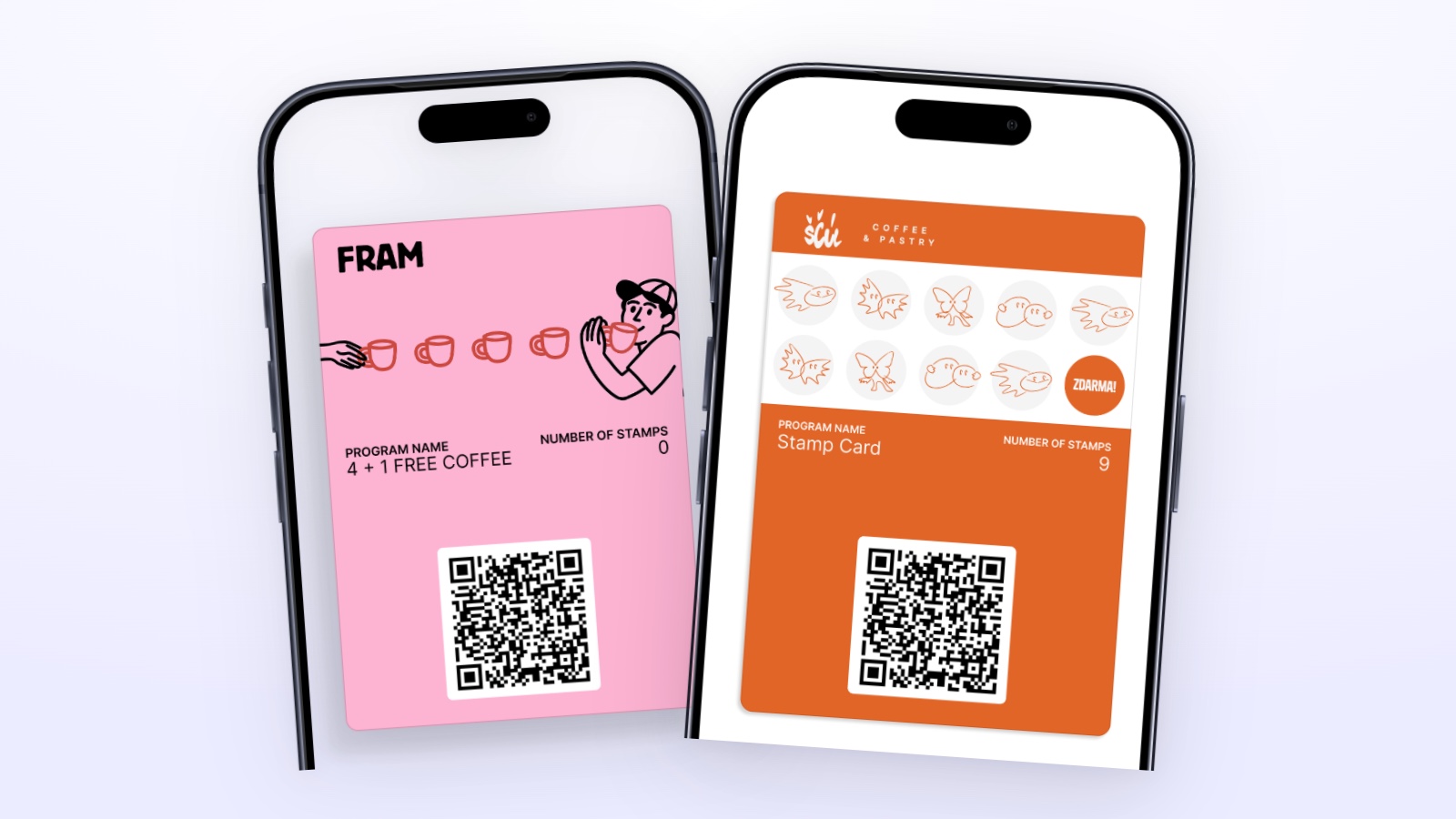
No upfront payment, and customers add it to Apple Wallet or Google Wallet.