

Tiered loyalty program: how to set up Silver and Gold levels in a small business
How to set up a tiered loyalty program in a small business: visits or spend, how many tiers, thresholds a regular can reach, discounts per tier and invites.

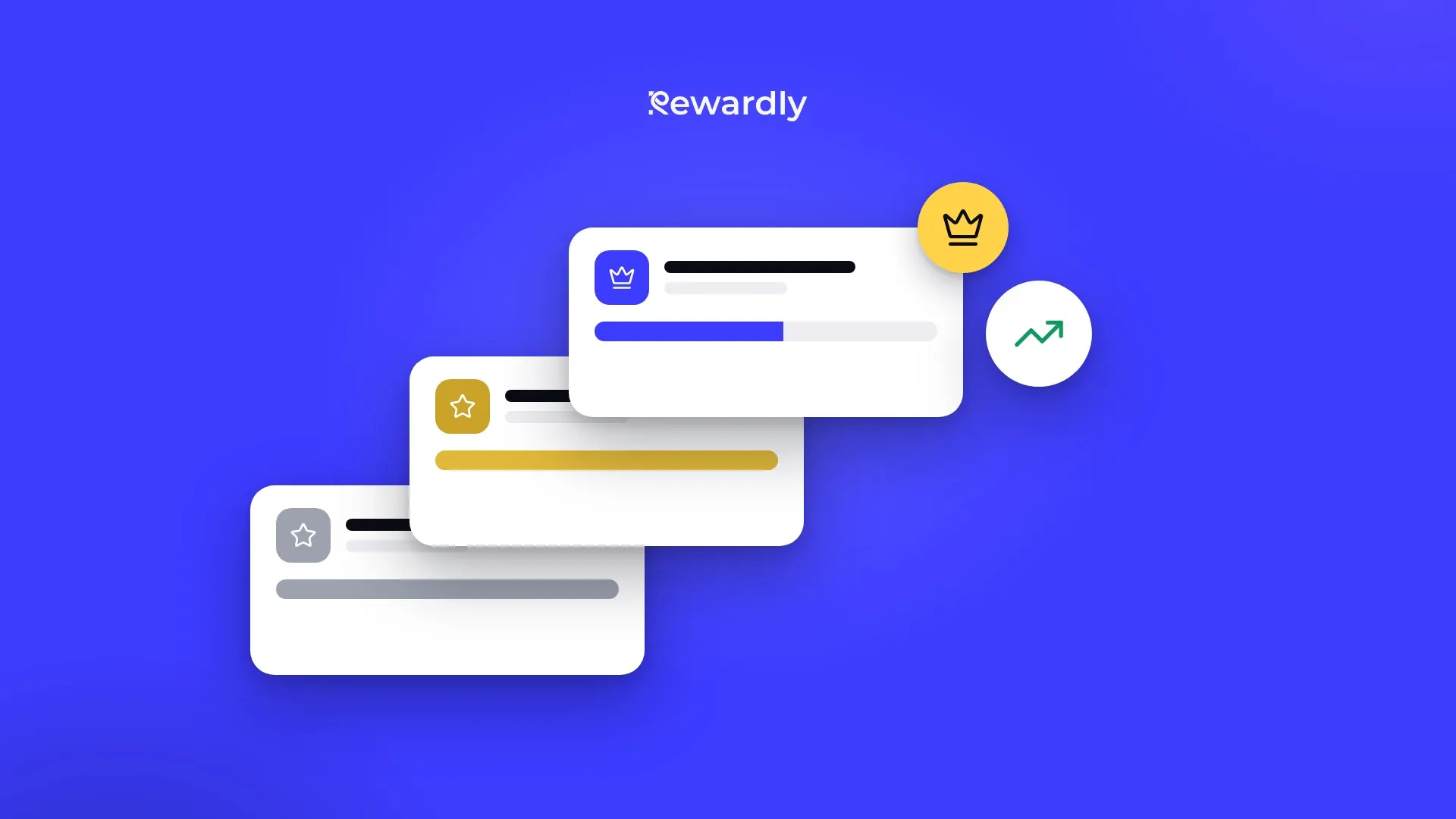
A stamp card rewards the tenth visit the same way whether the customer comes once a month or every morning. A tiered loyalty program goes further: whoever comes more often or spends more moves up a level and gets a lasting benefit, not a reward that is used once.
This guide is for a small business: a café, salon, bakery or shop. It walks through the decisions in the order you make them during setup: what the tiers are based on, how many there are, where the thresholds sit, what each tier gets, whether the program is open or invite only, and how to tell customers. How to pick specific people for a VIP card by your own judgement is covered in Who should get a VIP card.
How tiers work in Rewardly
In Rewardly, tiers are part of the VIP or membership card. A card can have 1 to 5 tiers, and the default names are Silver, Gold, Platinum, Diamond and Elite. Each tier has a threshold in visits or in spend, and its own percentage discount.
On every purchase, Rewardly checks whether the customer has passed a threshold. If so, they move up on their own and the card on their phone shows the new tier right away. Staff do not need to switch anything. VIP cards come with every plan, including Basic; more on the VIP cards page.
Visits or spend: decide once
This is the most important decision, because it cannot be changed after the card is created. If you later want to count differently, you create a new card and customers have to add it again.
- By visits suits businesses where purchases are similar in size: a café, a bakery, a lunch menu. You reward the habit, not the size of the bill, and the rule is easy to explain: "After ten visits you're Silver."
- By spend suits businesses where purchases vary a lot: a shop, or a salon with services at different prices. A customer who buys one expensive gift moves up faster than someone who buys a small item now and then. Spend is the total of all purchases on the card.
With spend, Rewardly needs the amount of every purchase. A connected POS sends it (Papaya POS, Storyous, Portos or Dotykačka, on Advanced and above), or staff enter it in the Rewardly scanner. If you have no connected POS and do not want staff typing an amount at every purchase, visits are simpler.
How many tiers: two are enough for a small business
Rewardly allows up to five tiers. A small business usually needs two: Silver for regulars and Gold for the most loyal. Staff need to explain each tier in one sentence, and customers need to remember what they get on it. With five tiers nobody remembers.
Add a third tier only once you see that Gold has many people in it and some of them come far more often than the rest.
Thresholds a regular can actually reach
A threshold nobody reaches does not motivate. A threshold everyone reaches on their second visit means nothing. The method:
- Take a typical regular, not your single most loyal customer, and estimate how often they come. For example twice a week for coffee, or once every five weeks for a haircut.
- Set Silver so they reach it in a month or two. The first step up has to come soon, or the customer forgets about the tiers.
- Set Gold so only steady regulars reach it, for example after six months to a year of visits.
Two examples for illustration, not data from real businesses:
- Café by visits: Silver after 10 visits, Gold after 40. A customer who comes twice a week reaches Silver in five weeks and Gold in about five months.
- Salon by spend: an average visit of €40 and a client who comes every five weeks. Silver at €120 (third visit, after about two months), Gold at €400 (tenth visit, just under a year).
How often the best customers visit in different businesses is shown in How often your best customers visit. Think the thresholds through before launch. Customers remember them, and raising them later feels like worse terms.
What each tier gets
A discount. In Rewardly each tier has its own percentage discount, for example 5% for Silver and 10% for Gold. Keep it low. A percentage discount applies to every purchase, including the ones the customer would have made anyway. A client who spends €400 a year with you costs you €40 at 10%. Why a percentage discount costs more than a stamp reward is explained in How many stamps on a loyalty card. The gap between tiers matters more than the size of the discount: Gold has to feel clearly better than Silver.
Perks from your staff. Add one or two perks that cost you little and that staff give in person. These perks are not card settings; you agree them with your team:
- first taste of a new item,
- priority appointments at the salon before the holidays,
- free gift wrapping,
- putting aside the last piece of a favourite product.
Staff see the customer's tier on the card on their phone, which the customer shows when paying. Agree exactly what Silver gets and what Gold gets, so everyone on the team gives the same.
Open or invite only
An open program can be joined by anyone through the QR code or link, and customers move up the tiers on their own. It suits a café or bakery where you want everyone collecting.
An invite only program lets only people with an invite through the signup page. You send invites by email or as a private link, and you can send them again, create a new link or revoke an unused invite. It suits a salon with a smaller circle of clients, or anywhere VIP should feel exclusive. Invited customers then move up the tiers automatically too. You can switch between open and invite only later as well.
A tiered VIP card can run next to your stamp card. On every plan you create as many cards as you need, and customers add each one separately.
How to tell customers about the tiers
- One line at the till: "We have a card with levels. After ten visits you get 5% off, after forty you get 10%."
- A small table by the QR code with the tier names, the thresholds and what each tier gets.
- A message to everyone who has the card on launch day. Push notifications are on Advanced and above.
- Congratulations at the counter. When a customer moves up, the card shows it right away. Staff notice at the next visit and say a few words. That means more to the customer than the percentage itself.
FAQ
Can I change later whether tiers are counted by visits or by spend?
No. That choice is locked once the card is created. To count differently, you create a new card and customers add it again.
Can I send a message only to Gold customers?
No. A message goes to everyone who has your card, to customers whose birthday is today, or to a group you define with a custom field from the signup form. So announce Gold perks at the counter.
Does the customer have to do anything to move up a tier?
No. When a purchase takes them past the threshold, they move up automatically and the card on their phone shows the new tier right away.
How much does a tiered VIP card cost?
VIP cards come with every plan, from €29.90 per location a month excluding VAT. POS integration and push notifications are on Advanced and above. The pricing page has the current prices of every plan.
Launch a tiered loyalty program with Silver and Gold. Try Rewardly for €0
No upfront payment, 14 days free.


