Your top 20% of members bring two thirds of your visits. How to find and keep them
The 80 20 rule tested on 60 real loyalty programs: the top 20% of members bring 65% of visits. How to find your regulars, keep them and grow the rest.
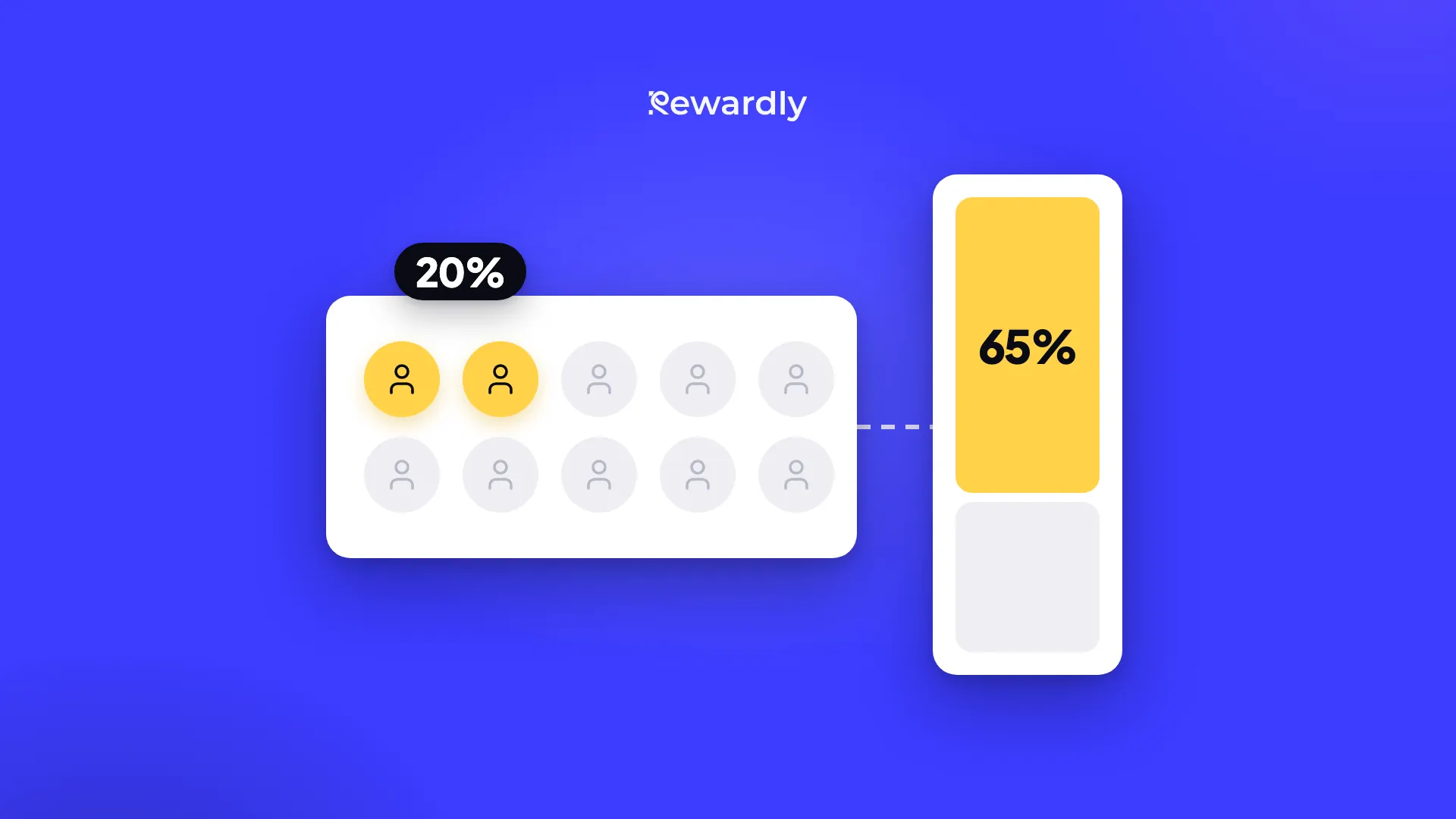
The 80 20 rule in customer retention is usually quoted without data. We checked it on real loyalty programs: 41,187 members of 60 businesses on Rewardly, including cafés, restaurants, bakeries and salons, over twelve months from October 2025 to September 2026. For every business we sorted members by how many days they visited and asked how much of the traffic came from the most loyal ones.
Why it matters for your revenue: every repeat visit is a sale. Rewardly's clients see 30% more repeat visits and 2.5 times higher customer value on average, and café Ráno in Bratislava reports 32% more revenue six months after moving to Rewardly.
What we found
In the typical (median) business:
- The top 20% of members made 65% of all member visits. In half of the businesses this share was between 57% and 69%.
- The top 10% alone made 46%.
- Across all members, 15% came in on 12 or more days a year, roughly once a month or more often.
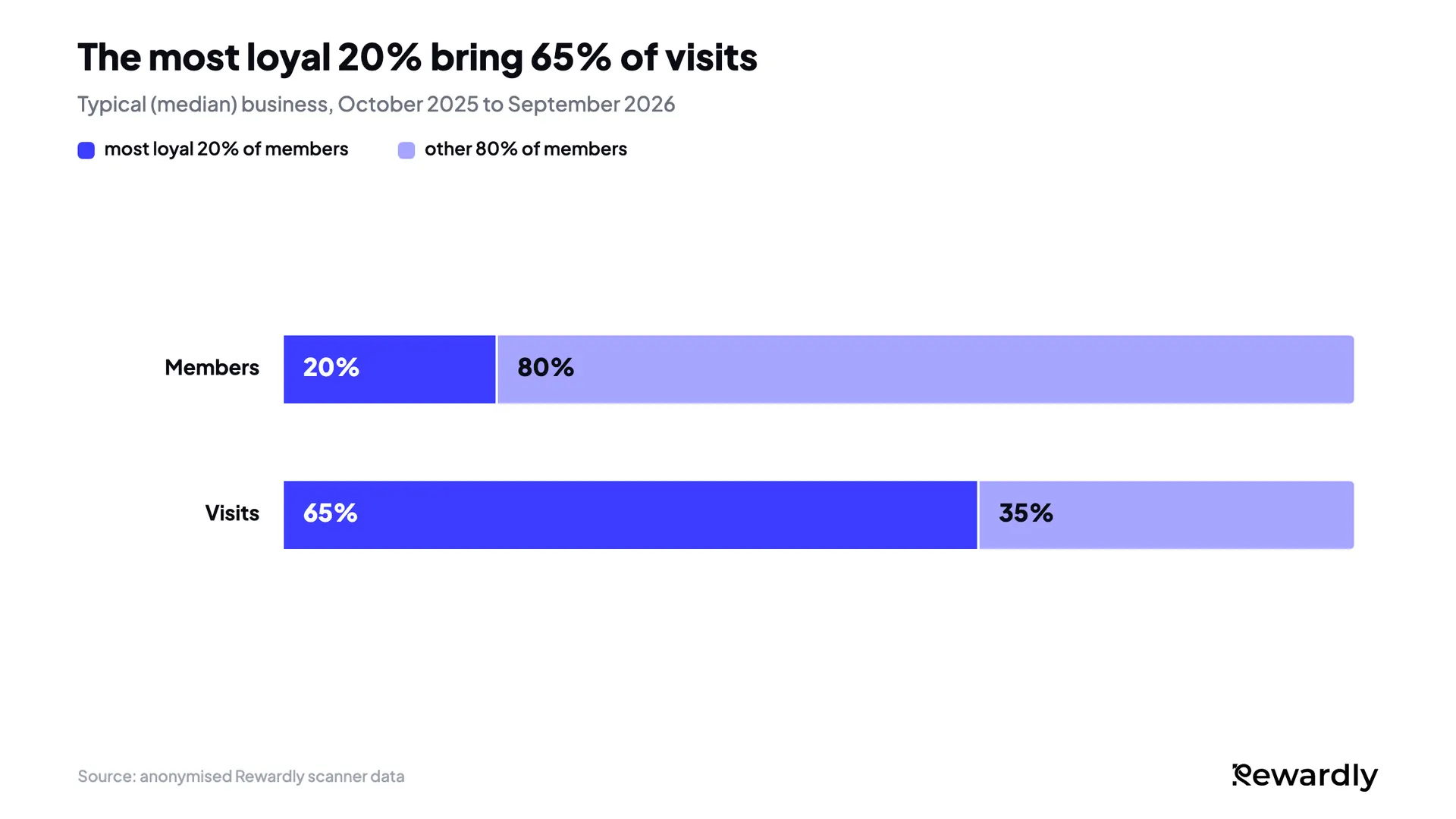
Not quite 80 20, but close: a loyal core makes most member visits. And there is a second group with big room to grow: in the typical business, 39% of members have made one visit in the twelve months so far.
Example in euros: 1,000 members in a typical business make about 5,100 visits a year. The top 200 make about 3,300 of them. With an average purchase of €5, that is roughly €16,500 a year from your most loyal fifth.
Two groups, two different jobs
Most loyalty programs treat every member the same: same card, same reward, same messages. The data suggests two groups with different needs, and a loyalty program can serve both.
Your regulars: recognise them
The top fifth already comes back without being asked. A bigger discount probably pays them for visits they would make anyway. What they are likely to value is being noticed: a reward that feels personal, early access, a small extra that new customers do not get. Rewardly offers VIP membership cards made for exactly this group.
Every regular you keep protects a big share of your visits. If one suddenly stops coming, a personal message is worth it.
Your newer members: make the second visit easy
This is where the growth is. Two likely reasons a member does not return quickly are that the first reward feels too far away, or they simply forget. The goal is the second visit, not the tenth. Make the first reward reachable, and remind them while they still remember you. Read how to set up loyalty rewards that work and 7 best ways to reactivate customers.
How Rewardly helps
- See who your top 20% are. Rewardly analytics shows your top customers, how often members return and their recent visits, without a spreadsheet.
- Reward them properly. Give your best customers a VIP card with their own perks.
- Remind everyone else automatically. A push notification lands on the card in their phone, and Rewardly can send it on its own to members who have not visited for a while.
- Speak to each group differently. A message that suits a newer member can feel pushy to a regular, and the other way round.
About the data
- Anonymised scans in the Rewardly scanner. Only businesses with at least 200 members active in the period were included. No business is named or identifiable.
- A visit is a day on which the member's card was scanned; several scans on one day count once. Members who joined late in the year had less time to visit, which raises the one visit share.
- Only businesses that scan cards in the Rewardly app are included, leaving out accounts with gaps in tracking, one business with a different scanning practice and probable staff test cards. The data counts visits, not spending, and describes how visits are spread, not why.
See who your regulars are. Try Rewardly for €0
Live in 2 minutes, with no upfront payment.