Gym members cancel after three months: why, and what keeps them
How to reduce gym membership cancellations: five reasons members quit after three months and what keeps them, from the first session to the cancellation talk.
Sofia Marin
To reduce gym membership cancellations, fix the reasons people drift away: they never build a habit, they see no progress, nobody knows them, they have no plan, or they train when the gym is packed. The first 90 days decide it: members who train regularly in that time usually stay. What keeps them is a good first session, two or three visits a week from the start, staff who know their name, small goals, a reward for showing up and a short conversation when someone wants to cancel.
Below you will find the five main reasons members quit, what the first weeks of a new member should look like, what to say at the front desk, which messages to send and what to ask a member who is cancelling.
Why do gym members cancel?
Few people quit over price or equipment. Most stop gradually: they skip one week, then two, and a month later realise they are paying for something they do not use. Behind that are usually these reasons.
1. No habit
A new member arrives with a resolution, not a habit. A resolution lasts a few weeks. If training has not become a normal part of the week by then, the first cold, business trip or holiday breaks it for good.
2. No visible progress
The first weeks hurt and the mirror shows nothing yet. Without any other proof that they are getting better, people easily decide it is not worth it.
3. Nobody knows them
Someone who walks past the front desk as a stranger will not be missed when they stop coming. And they know it: nobody will notice, so why make the effort.
4. No plan
New members often do not know what to do. They wander from machine to machine, feel unsure and leave after twenty minutes. Feeling unsure is unpleasant, and people avoid unpleasant things.
5. Training at the busiest hour
Someone who comes straight from work into a full gym waits for machines, has no space to change and feels in the way. Often they do not even know the gym is quiet an hour earlier or later.
Why the first three months are the danger zone
Many gyms and studios see the same pattern: members who train regularly in the first weeks stay for years. Members who already skip sessions in the first month often leave as soon as their contract allows. That is why many memberships end around month three: it is often when the first pass or intro contract runs out and the member decides whether to continue.
But the decision was made earlier. Someone who trained twice a week renews without thinking. Someone who came twice in the last five weeks cancels. So treat the first 90 days as a stage you manage on purpose, not one you wait to see play out.
How to reduce gym membership cancellations: the first session
The first session decides whether a new member feels at home or like a visitor.
- Show them around. Where the changing rooms and water are, which machines suit beginners, who to ask when they are unsure.
- Build a simple plan. Three to five exercises they can do alone. A short plan they keep beats a perfect one that overwhelms them.
- Tell them when it is quiet. If they can come in the morning or early afternoon, show them how much calmer it is then.
- Agree on the first week. Specific days, not "we'll see". Write them on a card or send them over.
- Note their name and goal. The front desk should know them on their next visit.
How to help a new member build a gym habit
Habits come from repetition at the same time of day. In the first weeks the point is not how hard members train, but whether they turn up.
- Two or three visits a week from the start. Shorter sessions more often beat one long session that leaves them sore for three days.
- Fixed days. Monday and Thursday, not "when I have time".
- Group classes. A class with a set time and an instructor who notices who is missing builds a habit better than open gym time.
- A second session with a trainer after two or three weeks: adjust the plan, add new exercises, praise what they can already do.
Why it matters that the front desk knows their name
Greeting someone by name is the cheapest way to make them feel they belong. A member the desk knows can tell their absence would be noticed.
- Teach the team new members' names first. Long time members will say hello anyway.
- Mention something specific: "How are the squats going?" or "Three sessions last week, great work."
- Introduce new people to trainers and instructors, not just the desk.
Small goals instead of a big resolution
"Lose ten kilos" takes months, and the first weeks barely move it. Small goals give a sense of progress right away.
- Attendance goals: eight sessions in the first month, twelve by the end of week six.
- Performance goals: a first pull up, five kilos more on the squat, twenty minutes on the bike without a break.
- Write them down. In an app, a notebook or the member's file. Progress people can see written down motivates them more than progress they only feel.
How to reward attendance: a stamp for every visit
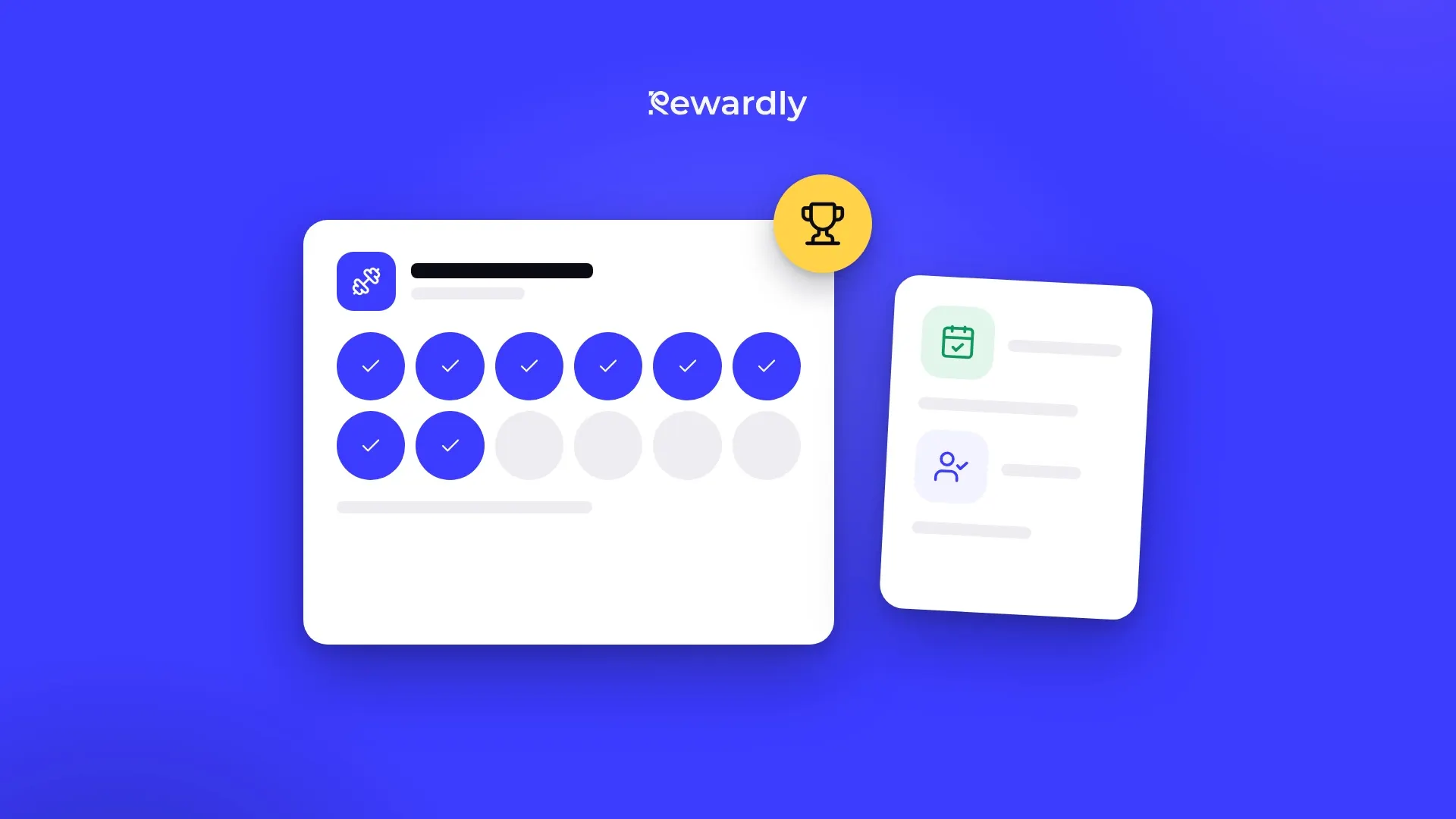
A reward for visits makes attendance visible. Members see how many sessions they have done and how many are left until the reward, which is exactly the sense of progress the first weeks lack.
Rewardly does not manage memberships, contracts or gym access. It works alongside them as a digital loyalty card: the member adds it to their phone in 10 seconds, without an app, and the front desk adds a stamp from a phone at each visit.
Example: a card with a stamp for every visit and a reward on the twelfth visit. Someone who trains twice a week earns it around week six, just when a new habit is easy to lose. The reward does not need to be big, it needs to be visible: a protein shake, a branded towel, a session with a trainer. Design the card for free with the Loyalty card maker.
If some people do not want a contract, you can offer a pass for a set number of visits. The difference between a paper and a digital one is covered in 10 visit pass: paper punch card or on the phone?
Which messages to send gym members
A message at the right moment reminds people to train better than any ad. With Rewardly they arrive on the card in the phone, as a notification on the lock screen.
- A welcome message when a new member adds the card: a short hello and when the gym is quiet.
- A reminder after a gap: a message that goes out if a member has not come back within a number of days you choose. For new members, keep it short, for example a week.
- A message to all card holders about a new class, changed opening hours or quieter mornings in January.
Push notifications are on the Advanced plan and above and only reach members who agreed to marketing messages. A message to everyone is not the place for a personal question: if you want to know why someone stopped coming, call them or ask in person.
What to ask when a member cancels
A cancellation is more than a form. It is your last chance to learn what went wrong, and sometimes to keep the member.
- "What made you decide to stop?" Listen, do not argue.
- "What would help you carry on?" A different time, a different plan, a shorter pass, a pause instead of cancelling.
- "Was anything missing for you here?" Write the answers down.
If the reason is a move or health, say thank you and leave the door open. If it is time or boredom, offer a fix: a membership freeze, morning hours, a group class. Once a month, go through the reasons you wrote down: if one keeps coming up, fix the cause, not the single case.
How to spot members who are drifting away
Waiting for the cancellation is too late. Once a week, check which new members have not been in for the last ten days. Your booking or access system has the check in data; a small studio may keep it in a notebook at the desk.
Contact these people personally: a short message from their trainer, a call, or a question on their next visit. Not a reproach, an offer: "We haven't seen you in a while. Want us to adjust your plan?" For more wording, see these messages that win back customers who stopped coming.
FAQ
Why do people stop going to the gym?
Most often because they never build a habit, see no progress, nobody knows them, they have no clear plan or they train when the gym is packed. Price is a less common reason than owners think. Most people drift away gradually, by skipping sessions.
When do gym members usually cancel?
Often at the end of their first pass or intro contract, around month three in many gyms. The decision is usually made earlier, when a member starts skipping sessions in the first weeks. That is why it pays to watch new members' attendance from week one.
How do you retain new gym members?
With a good first session and a simple plan, two or three visits a week from the start, staff who know their name and small goals they can see themselves reach. A reward for attendance and personal contact when someone skips also help.
Does rewarding attendance help gym member retention?
Yes, if the reward is within reach. A stamp for every visit makes attendance visible, and a reward around week six arrives when a new habit is easy to lose. It does not need to be expensive: a protein shake or a session with a trainer is enough.
Can Rewardly manage gym memberships?
No. Rewardly does not manage memberships, contracts or entry gates. It offers a digital loyalty card with stamps for visits, messages to the card on the phone and, on the Professional plan, sales of passes for a set number of visits.
Reward every gym visit. Try Rewardly for €0
No upfront payment, 14 days free.
Written by
Sofia Marin